| MOQ: | 1PCS |
| Price: | USD9.99-99.99 |
| Standard Packaging: | Vacuum bags+Cartons |
| Delivery Period: | 8-9 working days |
| Payment Method: | T/T |
| Supply Capacity: | 5000PCS per month |
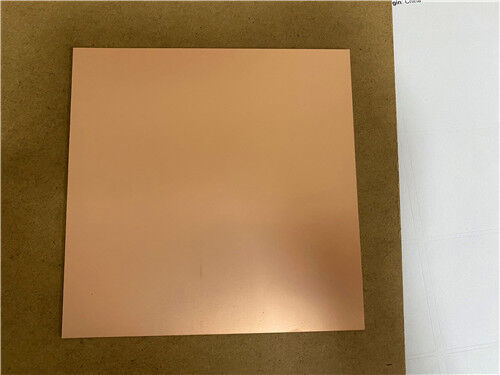
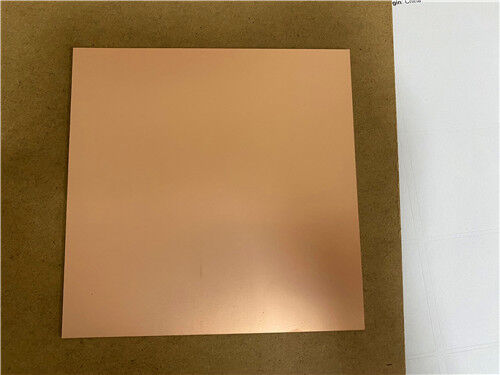
Wangling's F4BME217 is a high-performance PTFE composite laminate engineered for demanding RF and microwave applications. Precision-formulated from woven fiberglass cloth, PTFE resin, and film, it delivers superior, consistent electrical properties.
This next-generation material significantly outperforms its predecessor, F4B220, offering lower dielectric loss, higher insulation resistance, and enhanced stability. It serves as a reliable, high-performance domestic substitute for comparable imported laminates.
![]()
Key Material Variants:
The core dielectric formulation is available in two copper foil configurations to suit specific application needs:
F4BM217: Clad with standard Electrodeposited (ED) copper foil. This is a cost-effective solution for standard high-frequency applications where low Passive Intermodulation (PIM) is not critical.
F4BME217: Clad with Reverse-Treated Foil (RTF) copper. This configuration provides superior low-PIM performance, enables more precise etching for fine-line circuits, and reduces conductor loss, making it ideal for high-precision designs.
Tailored Performance through Material Science:
The electrical and mechanical properties of F4BME217 are precisely tuned by adjusting the ratio of PTFE to fiberglass cloth within the composite. This allows for controlled dielectric constants while maintaining low loss characteristics and enhanced dimensional stability.
A higher dielectric constant is achieved by increasing the fiberglass content, which improves dimensional stability, lowers the thermal expansion coefficient, and reduces temperature drift.
This adjustment involves a balanced trade-off, as a higher fiberglass ratio may result in a marginal increase in dielectric loss.
This design flexibility enables engineers to select the optimal material grade for a perfect balance of electrical performance, mechanical robustness, and processing requirements.
Typical Application Cases
-Microwave, RF, and Radar
-Phase Shifters, Passive Components
-Power Dividers, Couplers, Combiners
-Feed Networks, Phased Array Antennas
-Satellite Communication, Base Station Antennas
| Product Technical Parameters | Product Model & Data Sheet | |||
| Product Features | Test Conditions | Unit | F4BME217 | |
| Dielectric Constant (Typical) | 10GHz | / | 2.17 | |
| Dielectric Constant Tolerance | / | / | ±0.04 | |
| Loss Tangent (Typical) | 10GHz | / | 0.001 | |
| 20GHz | / | 0.0014 | ||
| Dielectric Constant Temperature Coefficient | -55ºC~150ºC | PPM/℃ | -150 | |
| Peel Strength | 1 OZ F4BM | N/mm | >1.8 | |
| 1 OZ F4BME | N/mm | >1.6 | ||
| Volume Resistivity | Standard Condition | MΩ.cm | ≥6×10^6 | |
| Surface Resistivity | Standard Condition | MΩ | ≥1×10^6 | |
| Electrical Strength (Z direction) | 5KW,500V/s | KV/mm | >23 | |
| Breakdown Voltage (XY direction) | 5KW,500V/s | KV | >30 | |
| Coefficientof Thermal Expansion | XY direction | -55 º~288ºC | ppm/ºC | 25, 34 |
| Z direction | -55 º~288ºC | ppm/ºC | 240 | |
| Thermal Stress | 260℃, 10s,3 times | No delamination | ||
| Water Absorption | 20±2℃, 24 hours | % | ≤0.08 | |
| Density | Room Temperature | g/cm3 | 2.17 | |
| Long-Term Operating Temperature | High-Low Temperature Chamber | ℃ | -55~+260 | |
| Thermal Conductivity | Z direction | W/(M.K) | 0.24 | |
| PIM | Only applicable to F4BME | dBc | ≤-159 | |
| Flammability | / | UL-94 | V-0 | |
| Material Composition | PTFE, Fiberglass Cloth F4BM paired with ED copper foil, F4BME paired with reverse-treated (RTF) copper foil. |

|||
![]()
| MOQ: | 1PCS |
| Price: | USD9.99-99.99 |
| Standard Packaging: | Vacuum bags+Cartons |
| Delivery Period: | 8-9 working days |
| Payment Method: | T/T |
| Supply Capacity: | 5000PCS per month |
Wangling's F4BME217 is a high-performance PTFE composite laminate engineered for demanding RF and microwave applications. Precision-formulated from woven fiberglass cloth, PTFE resin, and film, it delivers superior, consistent electrical properties.
This next-generation material significantly outperforms its predecessor, F4B220, offering lower dielectric loss, higher insulation resistance, and enhanced stability. It serves as a reliable, high-performance domestic substitute for comparable imported laminates.
![]()
Key Material Variants:
The core dielectric formulation is available in two copper foil configurations to suit specific application needs:
F4BM217: Clad with standard Electrodeposited (ED) copper foil. This is a cost-effective solution for standard high-frequency applications where low Passive Intermodulation (PIM) is not critical.
F4BME217: Clad with Reverse-Treated Foil (RTF) copper. This configuration provides superior low-PIM performance, enables more precise etching for fine-line circuits, and reduces conductor loss, making it ideal for high-precision designs.
Tailored Performance through Material Science:
The electrical and mechanical properties of F4BME217 are precisely tuned by adjusting the ratio of PTFE to fiberglass cloth within the composite. This allows for controlled dielectric constants while maintaining low loss characteristics and enhanced dimensional stability.
A higher dielectric constant is achieved by increasing the fiberglass content, which improves dimensional stability, lowers the thermal expansion coefficient, and reduces temperature drift.
This adjustment involves a balanced trade-off, as a higher fiberglass ratio may result in a marginal increase in dielectric loss.
This design flexibility enables engineers to select the optimal material grade for a perfect balance of electrical performance, mechanical robustness, and processing requirements.
Typical Application Cases
-Microwave, RF, and Radar
-Phase Shifters, Passive Components
-Power Dividers, Couplers, Combiners
-Feed Networks, Phased Array Antennas
-Satellite Communication, Base Station Antennas
| Product Technical Parameters | Product Model & Data Sheet | |||
| Product Features | Test Conditions | Unit | F4BME217 | |
| Dielectric Constant (Typical) | 10GHz | / | 2.17 | |
| Dielectric Constant Tolerance | / | / | ±0.04 | |
| Loss Tangent (Typical) | 10GHz | / | 0.001 | |
| 20GHz | / | 0.0014 | ||
| Dielectric Constant Temperature Coefficient | -55ºC~150ºC | PPM/℃ | -150 | |
| Peel Strength | 1 OZ F4BM | N/mm | >1.8 | |
| 1 OZ F4BME | N/mm | >1.6 | ||
| Volume Resistivity | Standard Condition | MΩ.cm | ≥6×10^6 | |
| Surface Resistivity | Standard Condition | MΩ | ≥1×10^6 | |
| Electrical Strength (Z direction) | 5KW,500V/s | KV/mm | >23 | |
| Breakdown Voltage (XY direction) | 5KW,500V/s | KV | >30 | |
| Coefficientof Thermal Expansion | XY direction | -55 º~288ºC | ppm/ºC | 25, 34 |
| Z direction | -55 º~288ºC | ppm/ºC | 240 | |
| Thermal Stress | 260℃, 10s,3 times | No delamination | ||
| Water Absorption | 20±2℃, 24 hours | % | ≤0.08 | |
| Density | Room Temperature | g/cm3 | 2.17 | |
| Long-Term Operating Temperature | High-Low Temperature Chamber | ℃ | -55~+260 | |
| Thermal Conductivity | Z direction | W/(M.K) | 0.24 | |
| PIM | Only applicable to F4BME | dBc | ≤-159 | |
| Flammability | / | UL-94 | V-0 | |
| Material Composition | PTFE, Fiberglass Cloth F4BM paired with ED copper foil, F4BME paired with reverse-treated (RTF) copper foil. |
|||
![]()